Capital & Finance
A second look at Q1 funding
Wisconsin startups disclosed at least $70 million in funding during the first quarter of 2026.
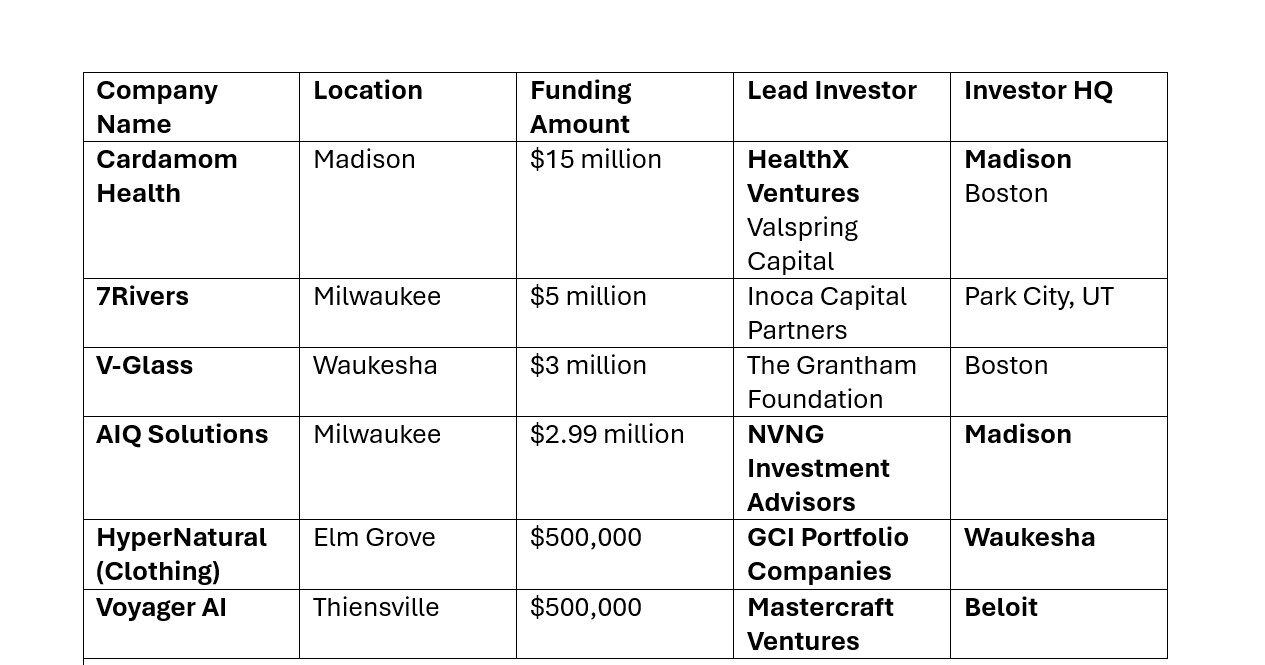
In a review of those deals to determine the source of funding, only about a third of those investment dollars could be attributed to named investors. The table below shows fully disclosed Wisconsin deals totaling $26.99 million. Of those investments, $18.99 million, roughly 70% of the disclosed funding dollars, is rooted in Wisconsin.
The remaining $43.01 million in investments came from unnamed investors. The largest known deal omitted from the table below was the $20.9 million funding round raised by Poynette Ironworks in January. Other notable omitted raises include $3 million raised by Delafield-based Forj and $16 million raised by two Milwaukee-based startups operating in stealth mode.
The funding data comes from PitchBook, which tracks private-market deals through press announcements, company disclosures, and regulatory filings. What it cannot track is everything that remains unreported. Private companies are under no obligation to report a fundraising round to PitchBook, to the press, or to the public, and many don’t. The $70 million figure should be viewed as a minimum confirmed amount, not the total capital raised. Grants and crowdfunding rounds are excluded from this analysis.
Why the full picture is out of reach
There is no central, mandatory ledger of private startup fundraising in the United States. A public company that sells stock must register the offering and disclose it in detail; a private startup raising an angel or venture round generally does not.
Most of these rounds rely on a Regulation D exemption from full registration that lets a company raise money privately, largely from accredited investors, without the public disclosure a registered offering requires. Companies using the exemption typically file a brief notice with the SEC called a Form D, which becomes public record.
A Form D names the company and the amount being offered. It does not name the investors. Some rounds, particularly small, private ones, can be raised without any public filing at all. The result is a record with two different kinds of holes in it. For some deals, the public knows the round happened and how large it was, but not who funded it. For others, there is no way of knowing the round ever happened.
Ultimately, because no rule requires every round to be reported, it is impossible to get a complete view of investments in early-stage startups.